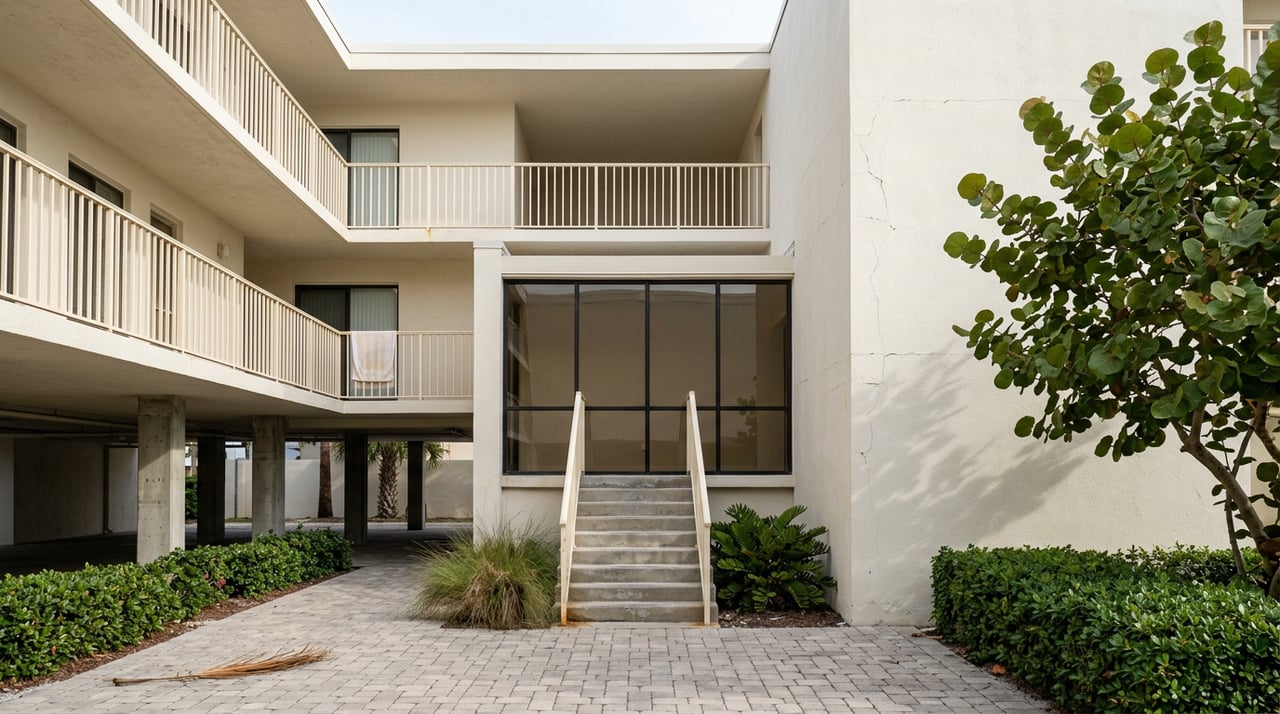
Buying a Condo in Indian Rocks Beach With a VA Loan? The Building Gets Underwritten Too
August 20, 2026
August 20, 2026
A veteran finds the unit. Direct Gulf view, walk to the sand, priced right for a first purchase after a PCS to Tampa Bay. The buyer's credit is clean, the VA certificate of eligibility is ready, the lender has already run the numbers on income and debt. Then, a few weeks into the contract, the loan stalls. Not because of the buyer. Because of the building.
This is the part of condo buying in Indian Rocks Beach that catches veterans and first-time investors off guard most often: your lender is underwriting two things at once, you and the condominium association, and the second one can kill a deal that the first one already approved.
When you buy a single-family home, the lender looks at you, the appraisal, and the title. When you buy a condo, a third file gets opened on the association itself. Reserve funding, delinquency rates, ownership concentration, pending litigation, insurance coverage. If the building fails any single test, the whole project can be ruled non-warrantable, and that has nothing to do with your income or your score.
For conventional loans, that gate is Fannie Mae and Freddie Mac's warrantability standard. For VA loans specifically, the gate is stricter and separate: the condominium has to appear on the VA's own approved project list before an appraisal can even be ordered. A building that's non-warrantable for a conventional buyer is rarely FHA or VA approved either, which means the same unit that a cash buyer could close on tomorrow may simply be off the table for a veteran using entitlement, until the building's paperwork changes.
If you want to check a specific building's status before you write an offer, the VA lets you request a customized condo report directly through its Lenders' Guaranty portal, and that step now matters more in Indian Rocks Beach than it did a few years ago.
Indian Rocks Beach kept much of its "Old Florida" cottage character longer than its neighbors because the motel boom of the 1950s left little open land to build on. According to the city's own history page, it wasn't until the 1970s that many of those cottages were replaced with condominiums. That single fact explains a lot about the town's current inventory: a meaningful share of the Gulf Boulevard condo stock is now somewhere between 45 and 55 years old, sitting right in the age band that triggers Florida's post-Surfside structural rules.
Fifty Gulfside, on the beach side of Gulf Boulevard, was built in 1972, making it 54 years old this year. Reflections on the Gulf, an 11-story, 84-unit building at 900 Gulf Boulevard, was completed in 1981, putting it at 45 years old in 2026. Neither building did anything wrong by being that age. But under Florida's milestone inspection law, any residential condominium three stories or taller has to complete a structural inspection once it reaches 30 years, or 25 years if it sits within three miles of the coast, a threshold that puts effectively every Gulf-front building in Indian Rocks Beach on the earlier clock. Buildings from this era are also required to have completed a Structural Integrity Reserve Study, the engineering-based savings plan that tells an association exactly how much it needs to be setting aside for roof, structure, waterproofing, plumbing, electrical, and fire protection.
None of this means a 1972 or 1981 building is unsafe. It means the building's paperwork, not its curb appeal, now decides whether a veteran or an investor can finance it on standard terms.
This is where the mechanism actually bites. Florida law no longer lets associations vote to waive or underfund reserves for those structural categories, so buildings that spent decades keeping dues artificially low are now closing that gap through higher monthly assessments, special assessments, or both. A building with a well-funded reserve study reads as low risk to an underwriter. A building that just discovered it's badly behind reads as exactly the kind of risk that trips a warrantability review.
Two more changes tightened the runway earlier this year. Fannie Mae retired its faster "Limited Review" path for condo loans on August 3, 2026, which now pushes more files into a Full Review that examines the association's financials in real detail. And for loan applications dated on or after July 1, 2026, any master insurance policy with a per-unit wind deductible above $50,000 makes the building non-warrantable on the insurance rule alone, a threshold that a lot of older, harder-to-insure coastal buildings struggle to meet.
Here's what actually changes for a buyer once a building slips out of warrantable status:
| Warrantable building | Non-warrantable building | |
|---|---|---|
| Loan type | Conventional, FHA, VA, jumbo at standard pricing | Portfolio or Non-QM only |
| Down payment | As low as 3-10% (owner-occupant) | Typically 20-30% |
| Rate | Standard market rate | Roughly 0.75 to 1.50 percentage points higher |
| VA/FHA eligibility | Available if project is on the approved list | Effectively unavailable |
For a veteran counting on zero down through VA entitlement, that last row is the whole ballgame. A non-warrantable building doesn't just get more expensive, it usually removes the loan program entirely.
If you're weighing an Indian Rocks Beach condo partly for its income potential, there's a second layer worth checking before the reserve conversation even starts. The city of Indian Rocks Beach allows short-term rentals, but individual condo declarations frequently don't. Some buildings prohibit Airbnb or VRBO-style stays outright, or impose minimum-stay and owner-waiting-period rules, even when city ordinance would otherwise permit shorter bookings. City eligibility and HOA eligibility are two different checks, and a unit can pass one while failing the other.
For context on why that distinction matters financially: recent short-term rental data for Indian Rocks Beach put the average listing's annual gross revenue at roughly $64,000, with an average daily rate near $438 and occupancy just above 46 percent, with March running as the strongest month and September the softest. Numbers like that only apply if the specific building's declaration actually allows the rental structure you're planning around, which is exactly the kind of detail that never shows up on the listing sheet.
A few requests up front save weeks of frustration later.
Does non-warrantable mean the building is unsafe? No. It's a financing classification, not a safety rating. A building can be structurally sound and still fail warrantability on reserve funding percentages, insurance deductibles, or ownership concentration.
Can a VA buyer purchase in a building that isn't yet VA-approved? Sometimes, through a one-time VA condo approval request, but plan for it to add real time to your timeline, and an appraisal generally can't be ordered until the project clears that review.
If the seller already knows about a pending special assessment, do they have to tell me? Florida law requires disclosure of known special assessments before closing. Get that disclosure in writing early, since it directly affects your financing and your true cost to own.
Every one of these checks takes a phone call or an email, not a lawyer, and doing them before you fall in love with a specific address is the difference between a smooth closing and a financing surprise three weeks before the finish line. If you're weighing a specific Indian Rocks Beach building, whether for a VA purchase, a second home, or a rental strategy, Christina Colon can help you pull the reserve study and rental rules before you write the offer, not after.
Stay up to date on the latest real estate trends.
Bringing an investor’s mindset, military discipline, and years of Tampa Bay market knowledge to help clients navigate every step of their real estate journey with confidence.
Luxury Presence
[email protected]
(727) 463-0125
License #SL3558237
1400 S International Pkwy Ste 1020 Lake Mary, FL 32746